Страница даты
23 мая 2026, Суббота
Праздники, посты и события
Поста нет.
Для этой даты другие календарные события пока не найдены.
Жития и богослужебные тексты
Saint Michael the Confessor, Bishop of Synnada
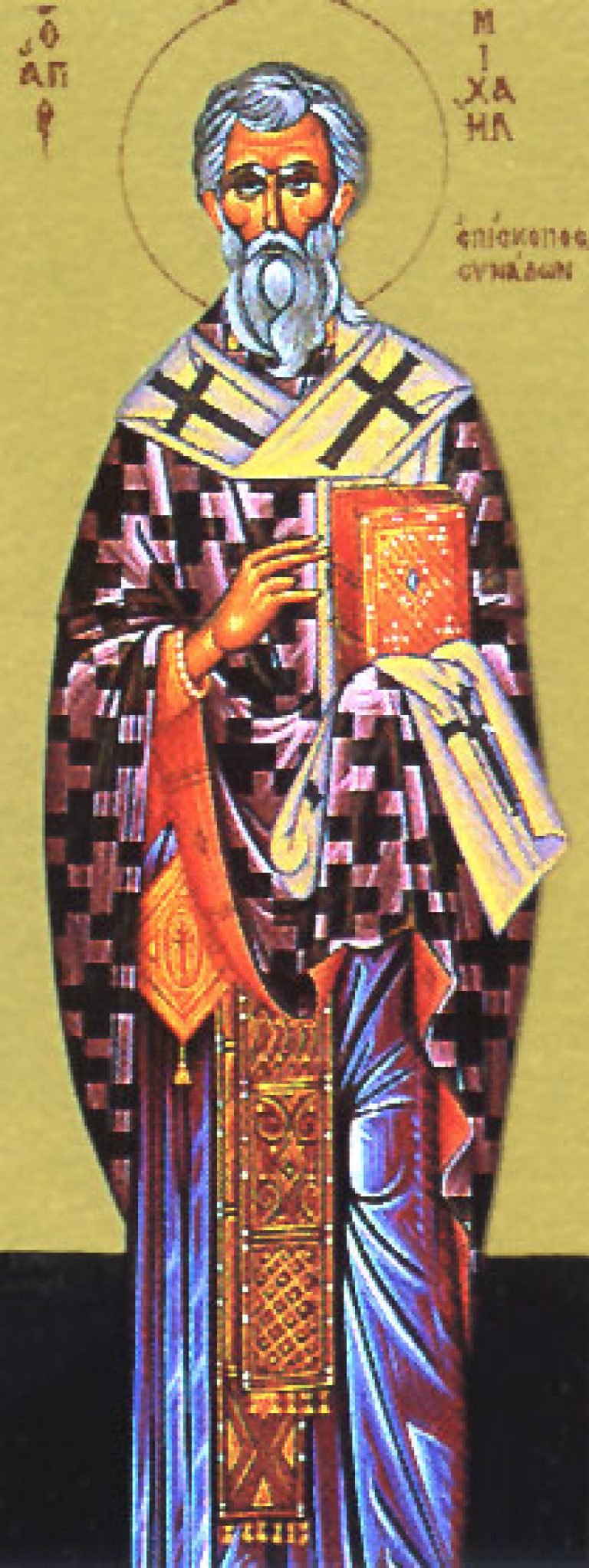
Saint Michael the Confessor From his youth he longed for the monastic life and was sent by Patriarch Tarasius (784-806) to a monastery on the coast of the Black Sea. Saint Theophylactus (March 8), the future Bishop of Nicomedia also entered the monastery together with him. At the monastery both monks engaged in spiritual struggles and were soon glorified by gifts from the Lord. Once, during a harvest, when the people were weakened by thirst, an empty metal vessel was filled with water by the prayer of the monks. Patriarch Tarasius consecrated Saint Michael as bishop of the city of Synnada. Through his holy life and wisdom, Saint Michael won the love of believers, and the notice of the emperors Nikēphóros I (802-811) and Michael I Rangabe (811-813). Saint Michael was present at the Seventh Ecumenical Council at Nicea in 787.
Synaxis of the Saints of Rostov
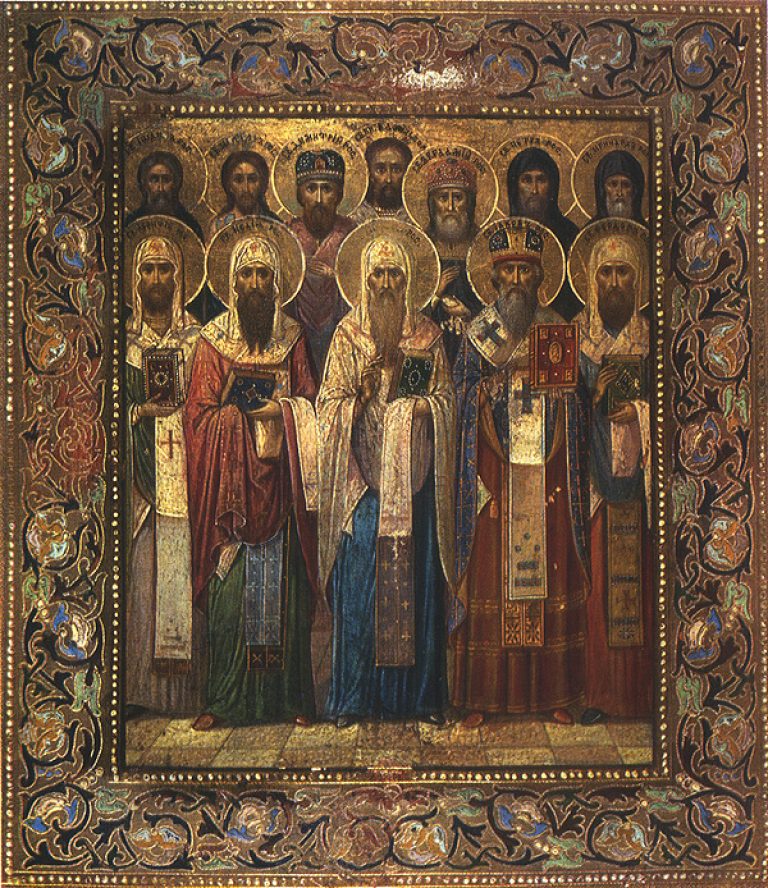
The celebration of the Synaxis of the Rostov and Yaroslav Saints on May 23 was established by resolution of His Holiness Patriarch Alexis I (+ 1970) and the Holy Synod of the Russian Orthodox Church, on March 10, 1964. Archimandrite Abraham the Wonderworker (October 29, 1073-1077) Prince Basil (+ 1238)
Venerable Euphrosyne, Abbess of Polotsk
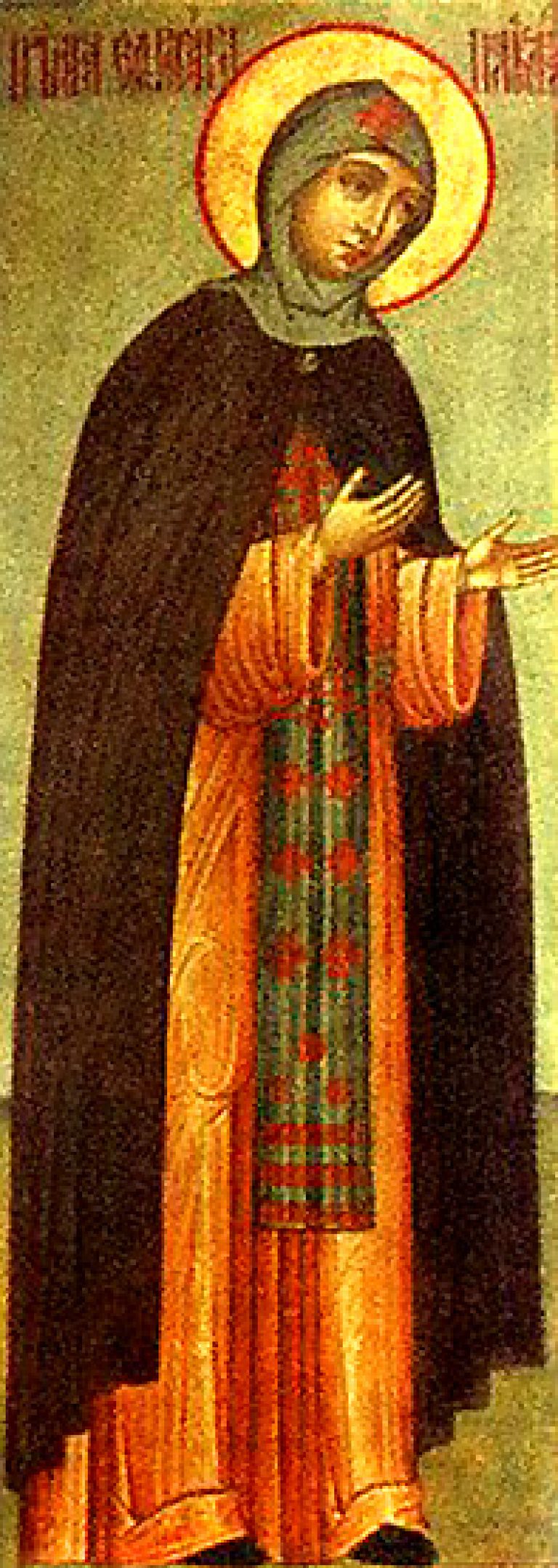
Saint Euphrosyne (Euphrosynē), Abbess of Polotsk, was named Predslava in the world, and was the daughter of Prince George Vseslavich. From her childhood she was noted for her love of prayer and book learning. After turning down a proposal of marriage, Predslava received monastic tonsure with the name Euphrosyne. With the blessing of Bishop Elias of Polotsk, she began to live near the Sophia cathedral, where she occupied herself by the copying of books. Around the year 1128 Bishop Elias entrusted the nun with the task of organizing a women’s monastery. Setting out for Seltso, the site of the future monastery, the ascetic took only her holy books. At the newly constructed Savior-Transfiguration monastery the saint taught the girls to copy books, singing, sewing and other handicrafts. Through her efforts, a cathedral was built in 1161, which survives to the present day. Saint Euphrosyne als...
Venerable Paisius, Abbot of Galich
No information is available at this time.
Martyr Michael “the Black-Robed” of Saint Savva Monastery
The Venerable Michael lived in the ninth century, and was from the city of Edessa in Mesopotamia, the son of Christian parents. After their death he distributed his inheritance to the poor, then went to Jerusalem to venerate the Holy Places. The Holy Land at that time was under Moslem rule. Michael remained in Palestine and settled in the Lavra of Saint Savva, where he became the disciple of his relative, Saint Theodore of Edessa (July 9), who spent his time both in the monastery and living as an anchorite in the Judean desert. Saint Theodore accepted him and tonsured him right away. The two made baskets of reeds together in order to support themselves. Saint Michael would take the baskets to the marketplace in Jerusalem in order to sell them. One day while at the marketplace, the eunuch of the Muslim Queen Seida, seeing that the baskets were both fine and well-made, took him along to th...
Saint Damiane (Demetrius), King and Hymnographer
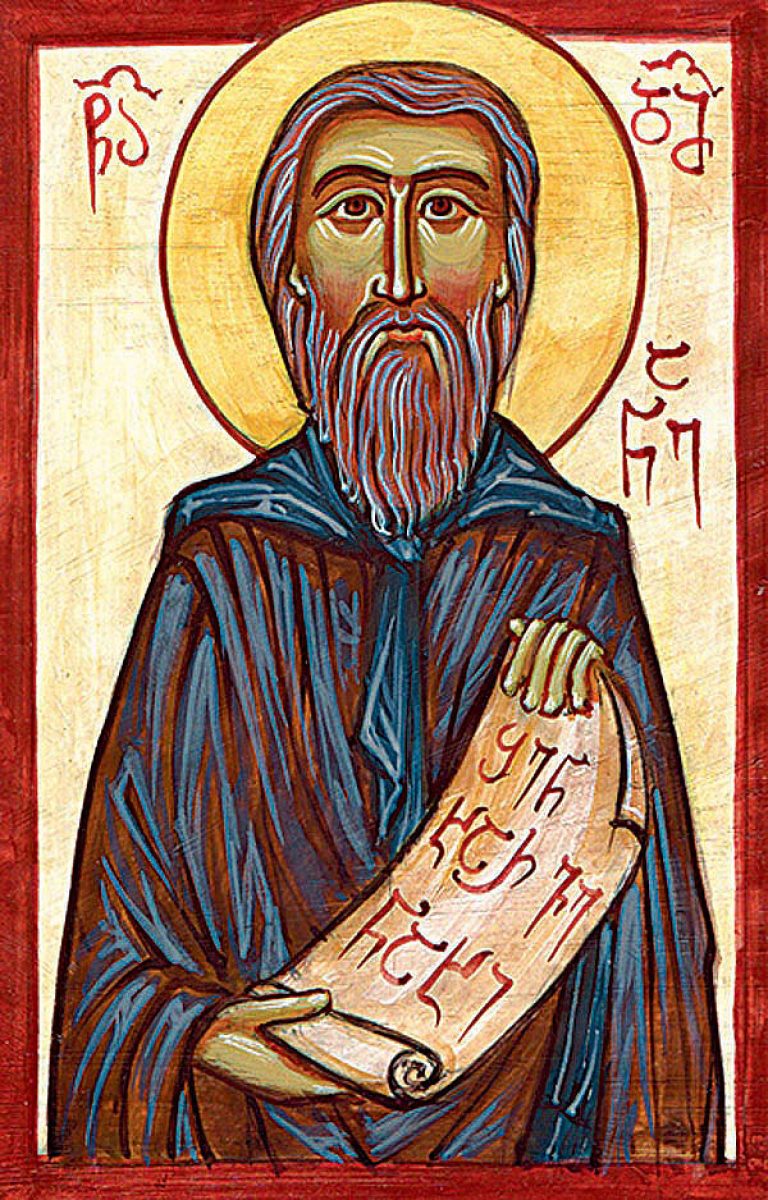
Saint Damiane (in the world King Demetre I) was the son of Holy King Davit the Restorer. King Davit proclaimed his son co-ruler of Georgia and crowned him with his own hands. He declared that his son Demetre, through his wisdom, chastity, bravery, and handsome appearance, would rule Georgia better than he himself had. Demetre acquired great glory while his father was still alive. In 1117 Davit sent him to Shirvan to fight, and the young commander astonished the people with his deftness in battle. Demetre seized Kaladzori Castle and returned home with many captives and much wealth. King Demetre I struggled tirelessly to protect the inheritance he had received from his father: he guarded Georgia’s borders and fought to enlarge its frontiers. Many regions, including Hereti, Somkhiti, Tashiri, Javakheti, Artaani and the Tao border, were repopulated during King Demetre’s rule. These regions h...
Icon of the Mother of God “You are a Vineyard” (Georgian: Shen khar venakhi)
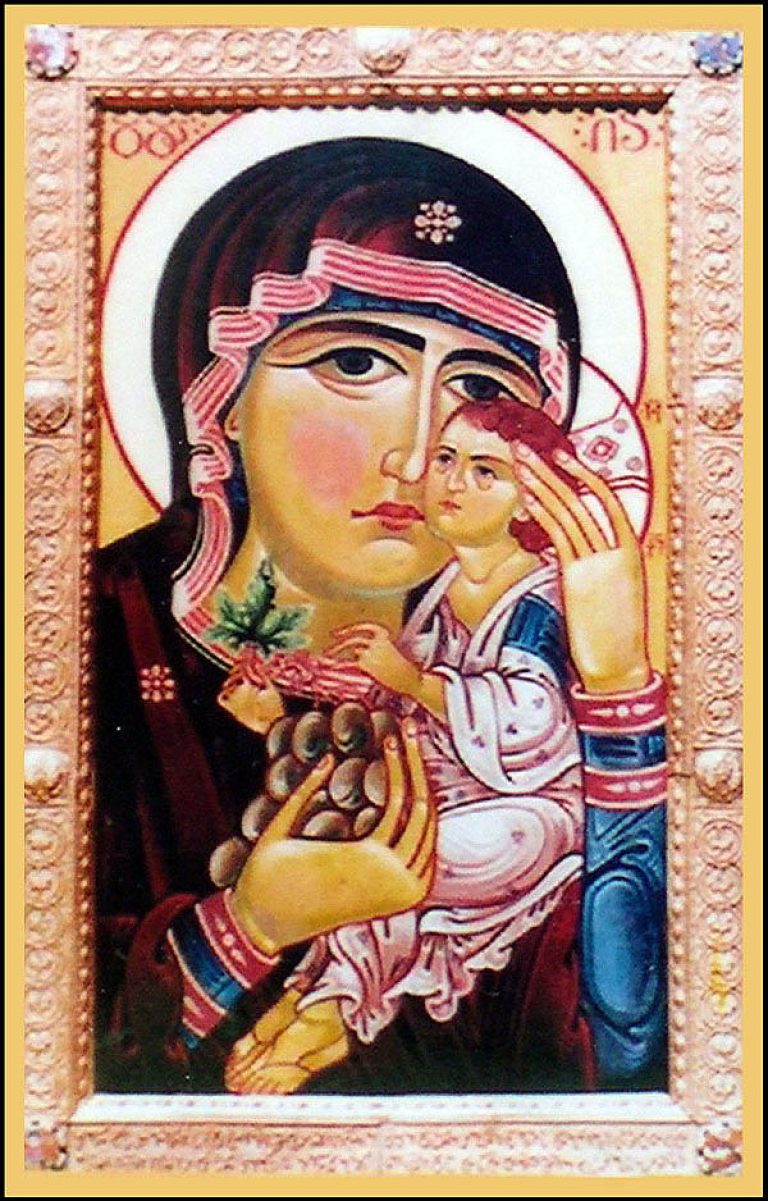
The name of this Icon is derived from a poem to the Mother of God which was composed by Saint Damiane (King Demetre I before his monastic tonsure): "You are a vineyard newly-blossomed...." Similar imagery may be found in other liturgical texts, such as the Theotokion of the Third Hour: (Tone 6) "You are the true vine who has blossomed forth the fruit of life. We beseech you, intercede, O Lady, together with the Apostles, and all the Saints, that mercy may be shown to our souls." and The Akathist to the Kursk Root Icon of the Theotokos (November 27), Ikos 4: "Hail, fruitful vine which quenches the thirst of all with the wine of compunction." The Virgin is depicted holding the Divine Child on her left arm, with her left hand on His head. In her right hand, she holds a cluster of grapes. Both Saint Damiane and the Icon are commemorated today.
Holy Myrrh-bearer Mary, the wife of Cleopas
According to Church Tradition, Saint Mary was the daughter of Saint Joseph the Betrothed by his first wife. She was still very young when the Most Holy Virgin Mary was betrothed to the Righteous Joseph and brought to his house. Thus, Saint Mary became the childhood friend of the Most Holy Theotokos. After the Righteous Joseph returned to Nazareth from Egypt with the Savior and the Mother of God, he married his daughter to his younger brother Cleopas, so she is known as Mary, the wife of Cleopas. The blessed fruit of that marriage was the Holy Hieromartyr Symeon (April 27), an Apostle of the Seventy, a kinsman of the Lord, and the second Bishop of the Church of Jerusalem.
Saint Leontius, Bishop of Rostov
No information available at this time.
Feasts & Saints
GOARCH Digital Chant Stand services: 2026-05-23
Calendar index day: 23-Saturday