Страница даты
4 мая 2026, Понедельник
Праздники, посты и события
Поста нет.
Для этой даты другие календарные события пока не найдены.
Жития и богослужебные тексты
New Martyr Archpriest Vasily Martysz

The holy New Martyr Archpriest Vasily Martysz was born on February 20, 1874 in Tertyn, in the Hrubieszow region of southeastern Poland. His father Alexander was a judge in Molczyce near Pinsk. After his retirement, he was ordained a priest and became rector of a local parish. EDUCATION In 1884, at the age of ten, Vasily made a brief trip to New York with his father. His beautiful singing during a church service attracted the attention of Bishop Vladimir. The hierarch prophesied that young Vasily would become a priest, and promised that he would invite him to his diocese in America once he was ordained. After returning to his country, he remembered the bishop’s words, and decided to follow in his father’s footsteps and become a priest. He began his theological education at the seminary in Chelm, where the rector was Bishop Tikhon (Belavin), the future Patriarch of Moscow.
Virgin Martyr Pelagia of Tarsus, in Asia Minor
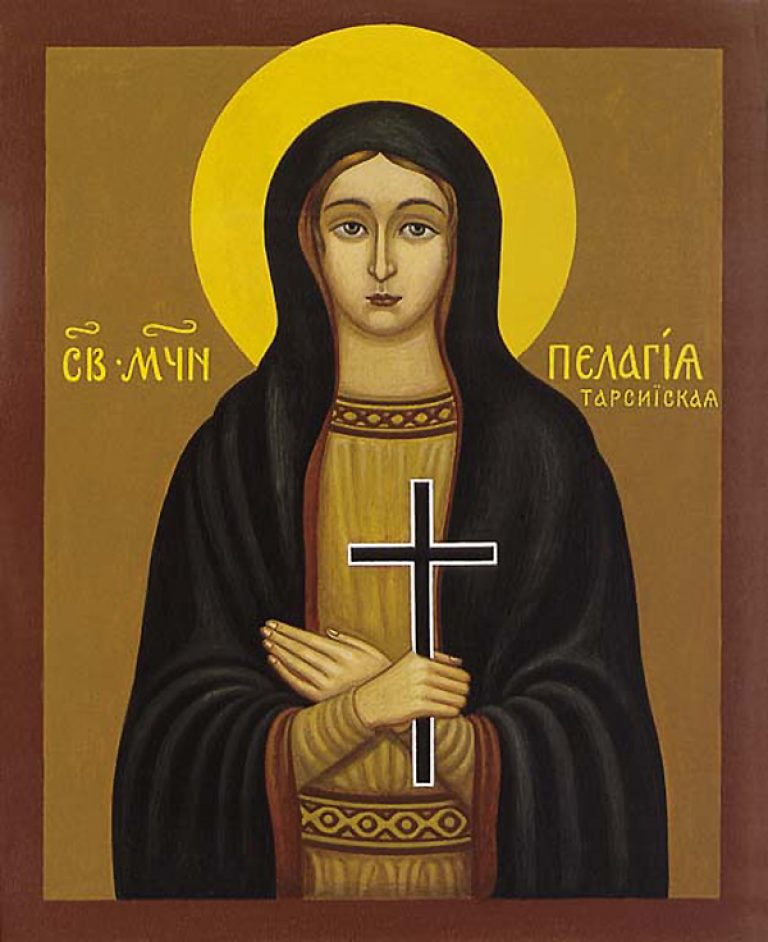
Saint Pelagia of Tarsus in Cilicia (southeastern Asia Minor) lived in the third century, during the reign of Diocletian (284-305), and was the daughter of illustrious pagans. When she heard about Jesus Christ from her Christian friends, she believed in Him and desired to preserve her virginity, dedicating her whole life to the Lord. Emperor Diocletian’s heir (a boy he adopted), saw the maiden Pelagia, was captivated by her beauty and wanted her to be his wife. The holy virgin told the youth that she was betrothed to Christ the Immortal Bridegroom, and had renounced earthly marriage. Pelagia’s reply greatly angered the young man, but he decided to leave her in peace for awhile, hoping that she would change her mind. At the same time, Pelagia convinced her mother to let her visit the nurse who had raised her in childhood. She secretly hoped to find Bishop Linus of Tarsus, who had fled to a...
Venerable Alphan, with his brothers, of Novgorod, founders of the Sokolnitzky Monastery
The Alfanov Brothers Saints Nikḗtas, Cyril, Nikēphóros, Clement, and Isaac lived during the fourteenth century at Novgorod. They led a righteous life and founded the Sokolnitsky monastery. As the chronicles relate, “A wooden church dedicated to Saint Nicholas was built on the Sokol hill and a monastery was founded” in 1389. The righteous Alfanov (Sokolnitskyie) brothers were kinsmen according to the chronicler James Anphalov [or Alfanov], who fled to the Dvina to avoid pursuit because of his dealings with Moscow. The righteous ones were subjected to misfortune because they were related to James, and they purified themselves through their innocent suffering. In the Tale of the brothers, a miracle took place at their relics.
Holy Confessor Erasmus, Bishop of Formia in Campania
Saint Erasmus zealously served the Lord from his youth. In his mature years he was consecrated as Bishop of Formium, Italy. During the persecution against Christians under the emperors Diocletian (284-305) and Maximian Hercules (284-305), Saint Erasmus left his diocese and went to Mount Libanus, where he hid for seven years. Once, however, an angel appeared to him and said, “Erasmus! No one vanquishes enemies if he is asleep. Go to your own city, and you shall vanquish your enemies.” Heeding the voice of the angel, Saint Erasmus left his seclusion. The first ones who asked him about his faith were soldiers who met him along the way. Saint Erasmus confessed himself a Christian. They brought him to trial at Antioch before the emperor Diocletian. The saint fearlessly confessed his faith in Christ and denounced the emperor for his impiety. Saint Erasmus was subjected to fearsome tortures, bu...
Hieromartyr Albian, Bishop of Anaea in Asia Minor
Saint Albian was bishop of the city of Aneium in the Aseian district, and suffered for Christ about the year 304 in a persecution against Christians under the emperor Diocletian and his co-ruler Maximian. Saint Albian was ordered to offer sacrifice to idols under the threat of death, but he confessed his faith in Christ and refused to serve idols. They tortured him with red-hot irons and beat him mercilessly, but he remained unyielding. They tortured his disciple with him, and he also remained faithful to the Lord Jesus Christ. Both holy martyrs were sentenced to death and thrown into a red-hot oven, in which they died, receiving the crowns of martyrdom.
Hieromartyr Silvanus, Bishop of Gaza, and 40 Martyrs with him
Saint Silvanus came from the vicinity of the city of Gaza, and was a soldier. Desiring to serve the heavenly King, he became a priest, and was consecrated Bishop of Gaza. Saint Silvanus converted many pagans to Christ. During the persecution against Christians under the emperor Diocletian he was taken for trial to the city of Caesarea. He underwent torture and bravely endured it, and was then sentenced to harsh labor in the copper mines. The holy bishop was exhausted by this work, but remained cheerful of spirit. He incessantly preached Christ to all those around him. This angered the pagans, who beheaded him. Forty holy martyrs, who believed in Christ after hearing the words of the bishop, were also martyred with him. Their death followed in the year 311.
Venerable Nikēphóros of Mount Athos
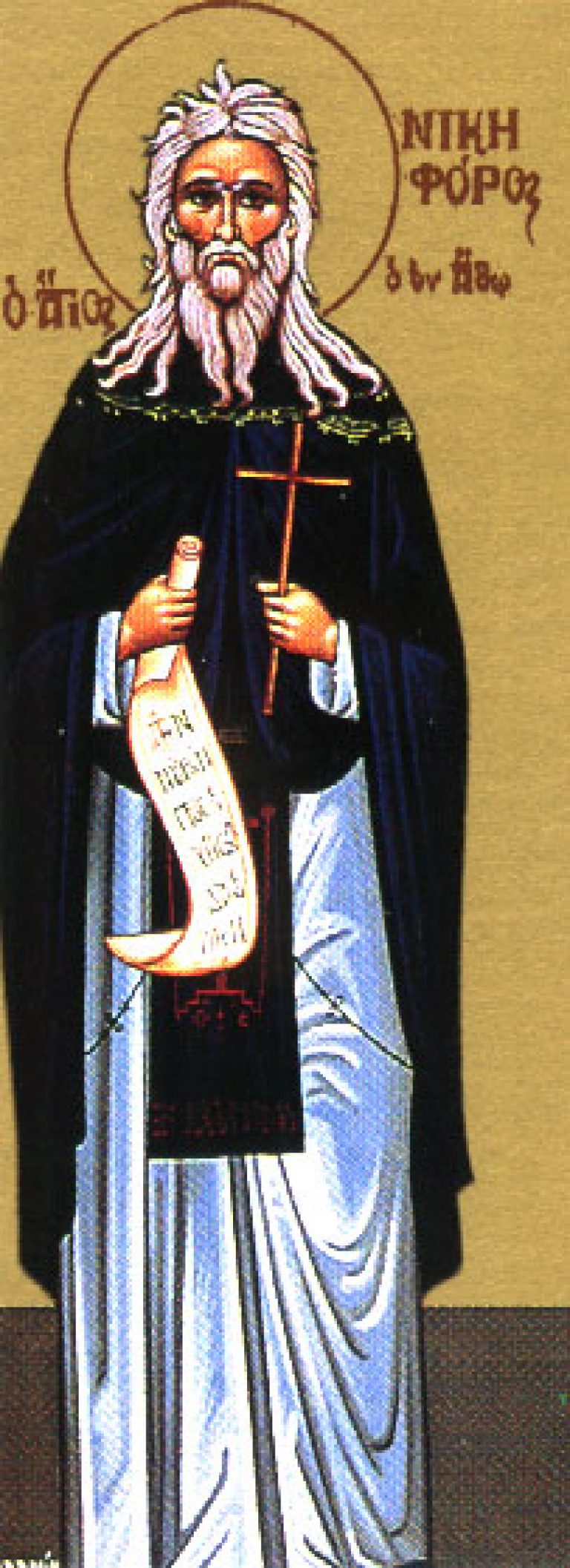
Saint Nikēphóros was the teacher of Saint Gregory Palamas (November 14). He grew up as a Roman Catholic, but he journeyed to the Byzantine Empire and became Orthodox. Saint Nikēphóros lived as an ascetic on Mount Athos, and died before the year 1300. His treatise “On Watchfulness and the Guarding of the Heart” is found in the fourth volume of the English Philokalia.
“Staro Rus” Old Russian Icon of the Mother of God
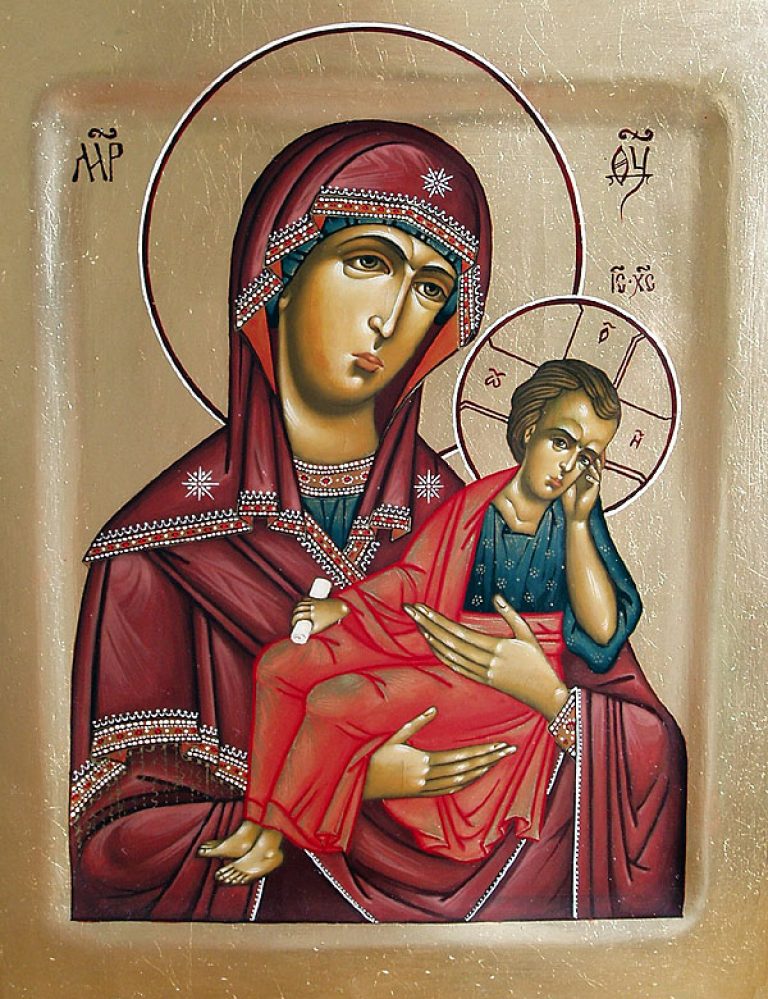
The Staro Rus (Old Russian) Icon of the Mother of God was so named because for a long time it was in Staro Rus, where it had been brought by the Greeks from Olviopolis during the very first period of Christianity in Russia. The icon was in Staro Rus until the seventeenth century. In 1655 during a plague it was revealed to a certain inhabitant of the city of Tikhvin that the pestilence would cease if the wonderworking Staro Rus Icon were transferred there, and the Tikhvin Icon sent to Staro Rus. After the transfer of the icons the plague ceased, but the people of Tikhvin did not return the icon and only in the eighteenth century did they give permission to make a copy of the Staro Rus Icon, which on May 4, 1768 was sent to Stara Russa. A feast was established in honor of this event. On September 17, 1888 the original was also returned to Staro Rus and a second Feast day established.
Saint Monica
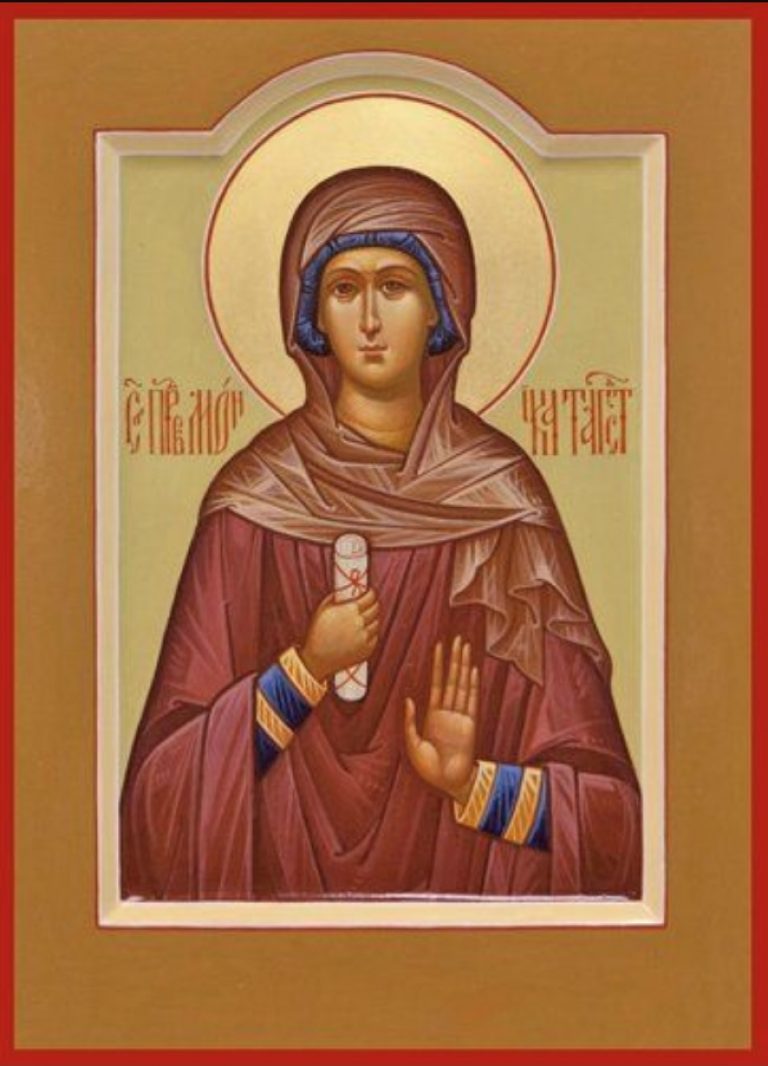
Saint Monica, the mother of Saint Augustine of Hippo (June 15), was born circa 330-333 in Tagaste, North Africa. Her parents were Christians, but little is known of her early life. Most of our information about her comes from Book IX of her son’s Confessions. Saint Monica was married to a pagan official named Patritius, who had a short temper and lived an immoral life. At first, her mother-in-law did not like her, but Monica won her over by her gentle disposition. Saint Monica and Patritius had three children: Saint Augustine, Navigius and Perpetua. It was a source of great sorrow to her that Patritius would not permit them to be baptized. She worried about Augustine, who lived with a young woman in Carthage and had an illegitimate son with her. Her constant prayers and tears for her son had the effect of converting her husband to Christ before his death. Augustine, however, continued on...
Feasts & Saints
GOARCH Digital Chant Stand services: 2026-05-04
Calendar index day: 04-Monday
Saint Pelagia the Nun-martyr of Tarsus
Official Saints category of the Greek Orthodox Patriarchate of Antioch and All the East.