Страница даты
3 мая 2026, Воскресенье
Праздники, посты и события
Поста нет.
Для этой даты другие календарные события пока не найдены.
Жития и богослужебные тексты
Sunday of the Paralytic
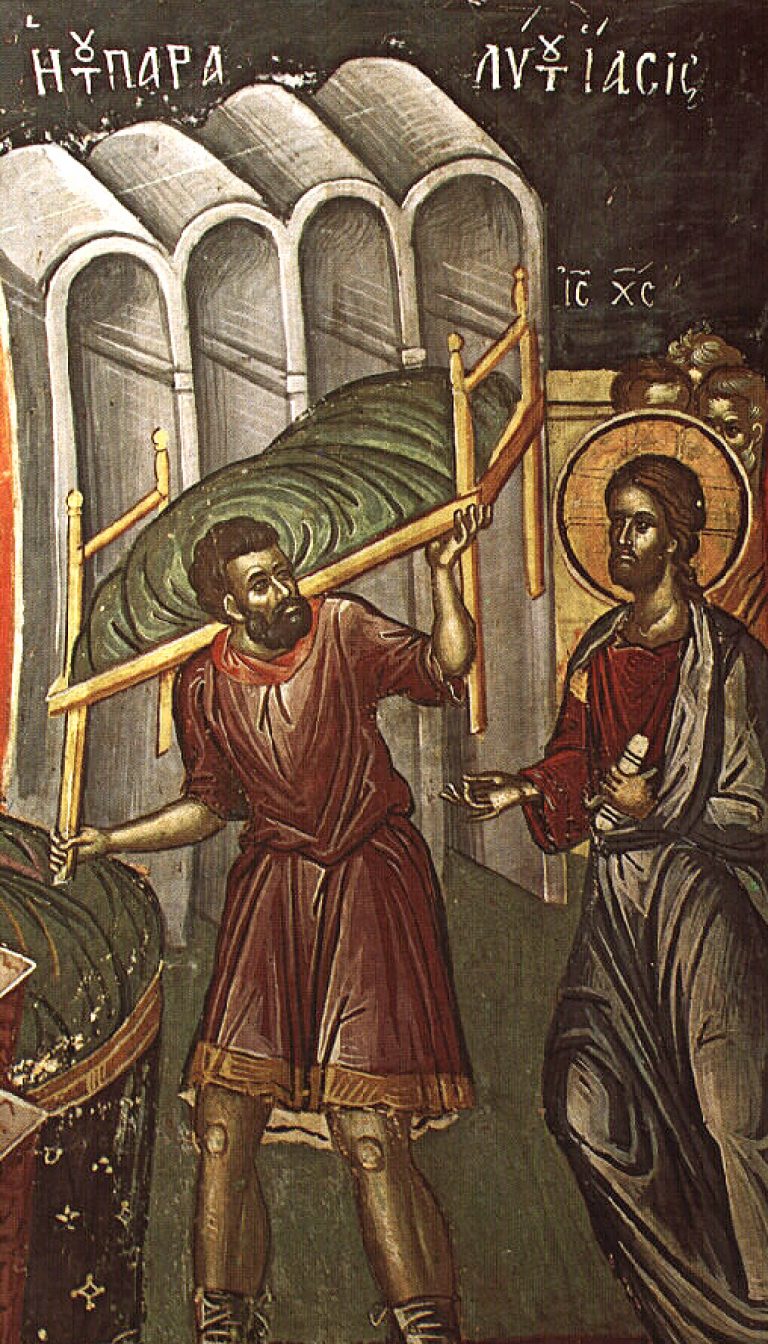
Many miracles in the Old Testament involve water. To name but a few, the water of the Nile turned to blood after Moses lifted his rod and struck the water before Pharaoh and His servants (Exodus 7:20). Not only was the Nile turned to blood, but also "their rivers, their canals, their ponds, and all their pools of water, that they may become blood; and there shall be blood throughout the land of Egypt, both in vessels of wood and in vessels of stone" (Exodus 7:19). In chapter 14 of Exodus, Moses divided the waters of the Red Sea, and the Hebrews passed over as if on dry land. When they were safely across, the waters came together, and their Egyptian pursuers were drowned. On their forty year journey to the Promised Land, the Hebrews camped at Rephidem, but there was no water for them to drink. The people murmured against Moses, asking him why he had led them out of Egypt. God told Moses t...
Martyr Timothy the Reader and his wife, Maura, in Egypt

Saints Timothy and Maura suffered for the faith during the persecution under the emperor Diocletian (284-305). Saint Timothy came from the village of Perapa (Egyptian Thebaid), and was the son of a priest named Pikolpossos. He was made a reader among the church clergy, and also a keeper and copyist of divine service books. Saint Timothy was denounced as a keeper of Christian books, which the emperor ordered to be confiscated and burned. They brought Saint Timothy before the governor Arian, who demanded that he hand over the sacred books. They subjected the saint to horrible tortures for his refusal to obey the command. They shoved two red-hot iron rods into his ears, from which the sufferer lost his eyesight and became blind. Saint Timothy bravely endured the pain and he gave thanks to God, for granting him to suffer for Him. The torturers hung the saint head downwards, putting a piece o...
Venerable Theodosius, Abbot of the Kiev Far Caves Monastery, and Founder of Coenobitic Monasticism in Russia
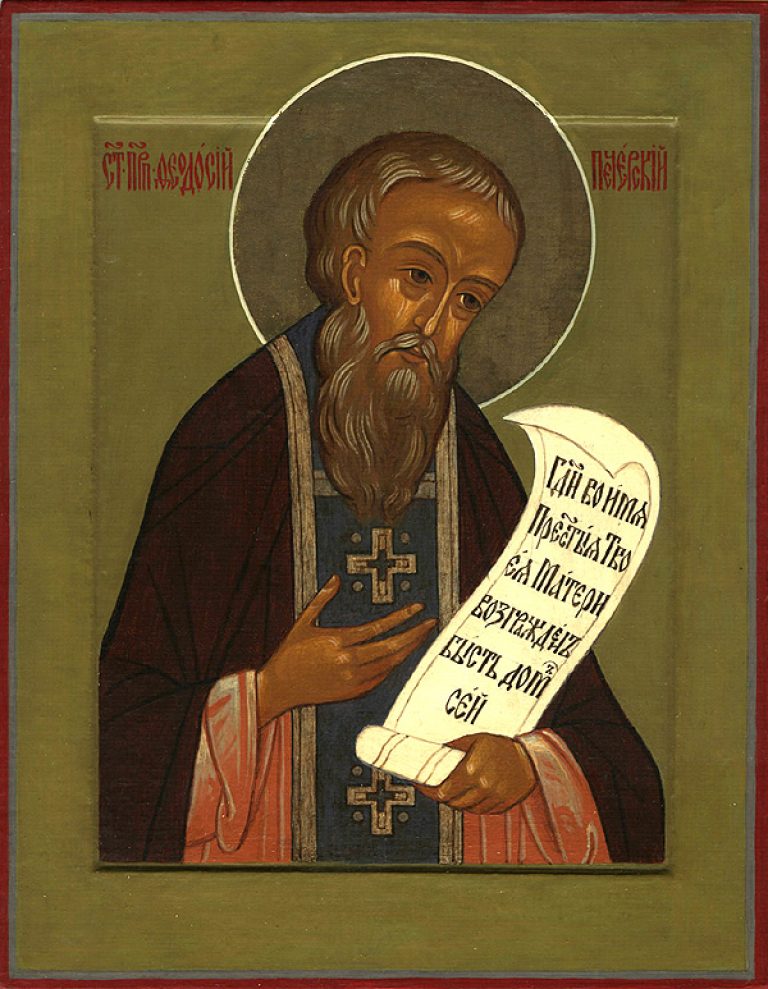
Saint Theodosius of the Caves, was the Father of monasticism in Russia. He was born at Vasilevo, not far from Kiev. From his youth he felt an irresistible attraction for the ascetic life, and led an ascetic lifestyle while still in his parental home. He disdained childish games and attractions, and constantly went to church. He asked his parents to let him study the holy books, and through his ability and rare zeal, he quickly learned to read the books, so that everyone was amazed at his intellect. When he was fourteen, he lost his father and remained under the supervision of his mother, a strict and domineering woman who loved her son very much. Many times she chastised her son for his yearning for asceticism, but he remained firmly committed to his path. At the age of twenty-four, he secretly left his parents’ home and Saint Anthony at the Kiev Caves monastery blessed him to receive mo...
Saint Peter the Wonderworker, Bishop of Argos
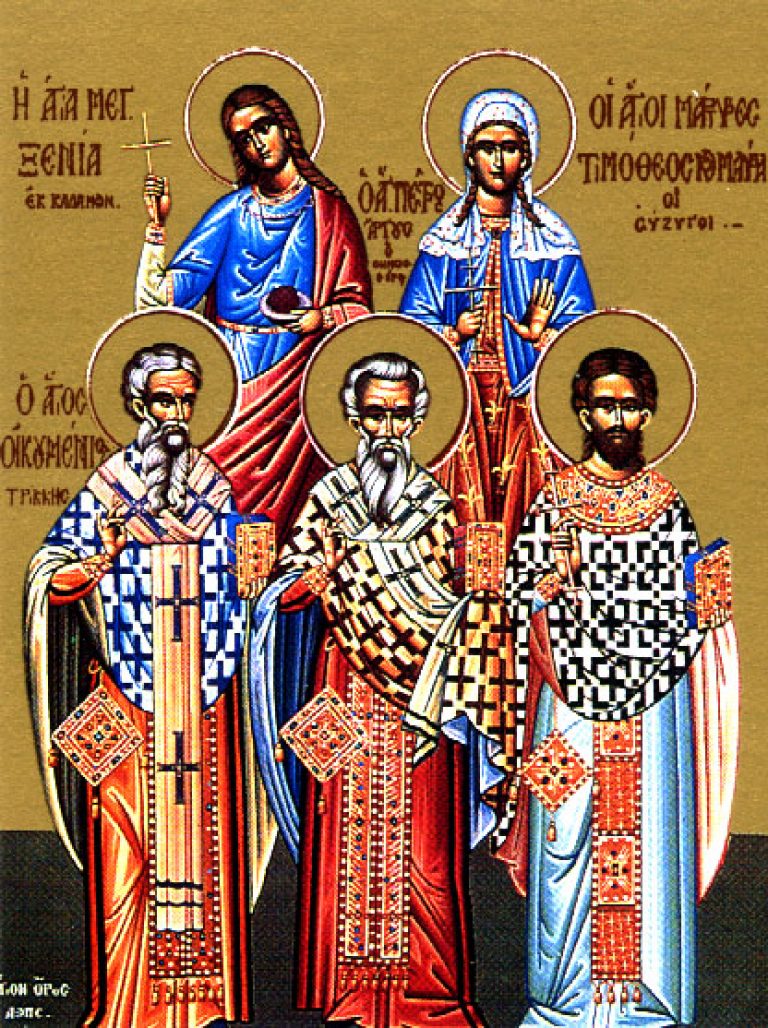
Saint Peter the Wonderworker, Bishop of Argos in the Peloponnesos, lived during the ninth and early tenth centuries, and was raised by pious parents. Saint Peter’s parents, and later his brothers Paul, Dionysius, Platon and Saint Peter himself, all became monks. Saint Peter zealously devoted himself to monastic labors, and he excelled all his fellows. This came to the attention of the Italian bishop Nicholas (who from 895 was Patriarch of Constantinople), who wanted to elevate him to the rank of bishop. Saint Peter declined, accounting himself unworthy of such honor. Bishop Nicholas consecrated Paul, Saint Peter’s brother, as Bishop of Corinth, and Saint Peter went to his brother and lived with him, taking upon himself the spiritual struggle of silence. After a year emissaries came to Bishop Paul from the city of Argos, where the bishop had died, and they asked for Saint Peter as their b...
“Svena” Icon of the Mother of God
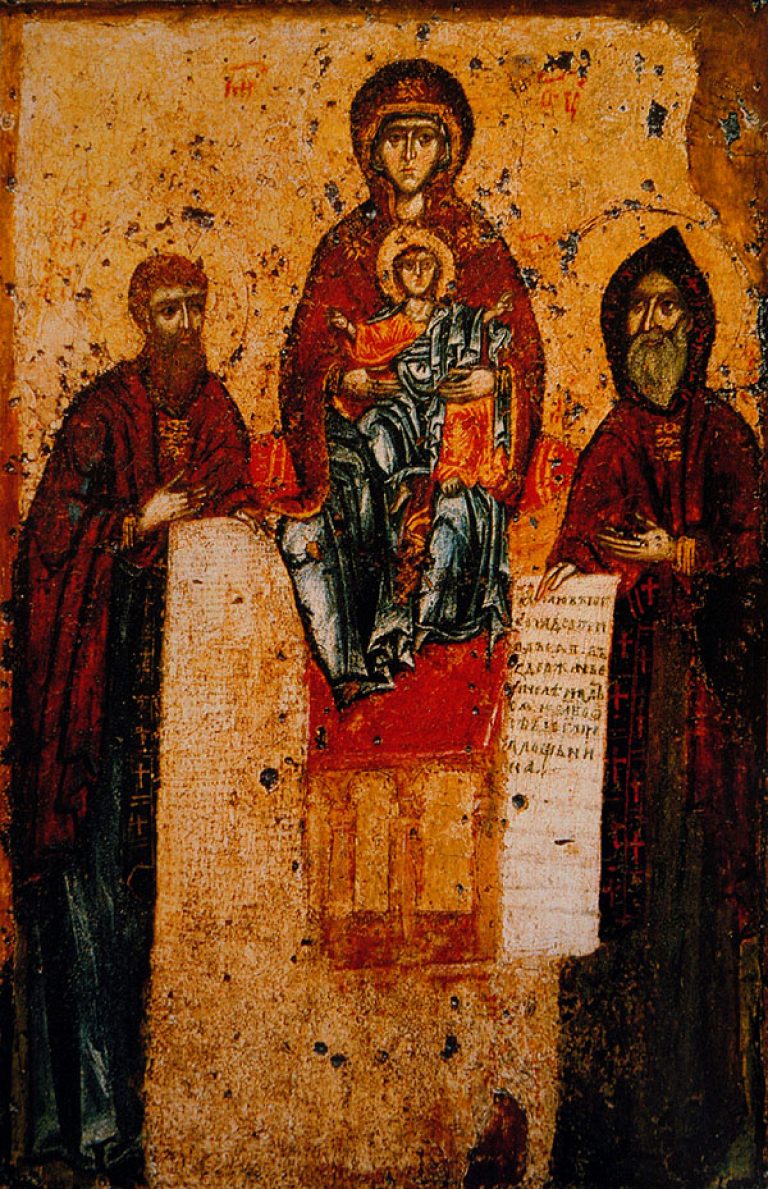
The Svena Caves Icon of the Mother of God was painted by Saint Alypios of the Caves (August 17). In the Icon the Mother of God is depicted sitting upon a throne, and with the Divine Infant on her lap. Saint Theodosios is on the right side of the throne, and Saint Anthony of the Caves on the left. Until the year 1288 it was in the Kiev Caves Monastery, where it was glorified by miracles. In 1288 it was transferred to the Bryansk-Svena Monastery, which is dedicated to the Dormition of the Most Holy Theotokos. Prince Roman of Chernigov became blind while at Bryansk. Hearing about the miracles worked by the Icon painted by Saint Alypios, the prince sent a courier to the Monastery asking that the Icon be brought to him at Bryansk. A priest was sent with the Icon along the River Desna. After the voyage the boat landed on the right bank of the Svena River. After resting for the night, they went...
Translation of the Dormition Icon of the Mother of God from Constantinople to the Kiev Caves, Far Caves

The Kiev Caves Icon of the Dormition of the Most Holy Theotokos is one of the most ancient icons in the Russian Orthodox Church. The Mother of God entrusted it to four Byzantine architects, who in 1073 brought the icon to Saints Anthony and Theodosius of the Caves. The architects arrived at the monks’ cave and asked, “Where do you want to build the church?” The saints answered, “Go, the Lord will point out the place.” “How is it that you, who are about to die, have still not designated the place?” the architects wondered. “And they gave us much gold.” Then the monks summoned all the brethren and they began to question the Greeks, saying, “Tell us the truth. Who sent you, and how did you end up here?”
Saint Mamai, Catholicos of Georgia
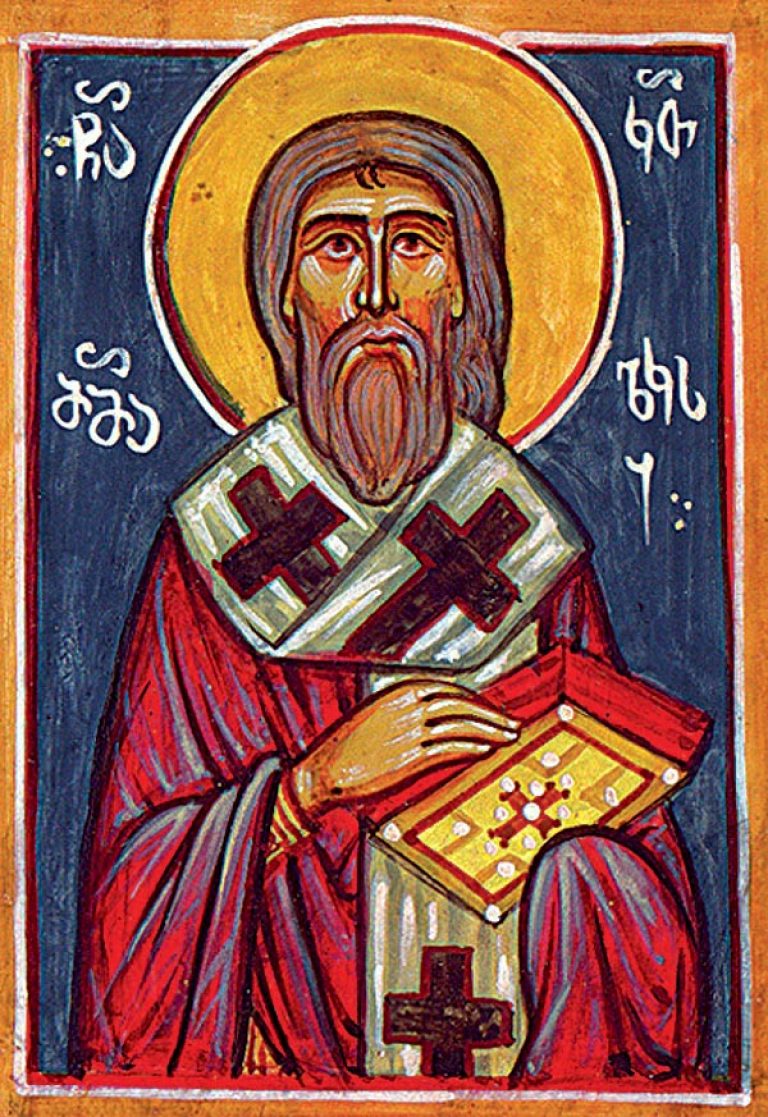
Saint Mamai served as chief shepherd of the Georgian faithful from 731 to 744. The information we have about his life is scarce, but it is known that Saint Mamai was abbot of Zedazeni Monastery and died a martyr for Christ. Outstanding in his achievements and endowed with profound spiritual wisdom, Saint Mamai was enthroned as Catholicos of Georgia at a time when the catholicos and the Georgian king were frequently the first victims of invading armies.
Saints Michael and Arsenius of Ulompo, Georgia
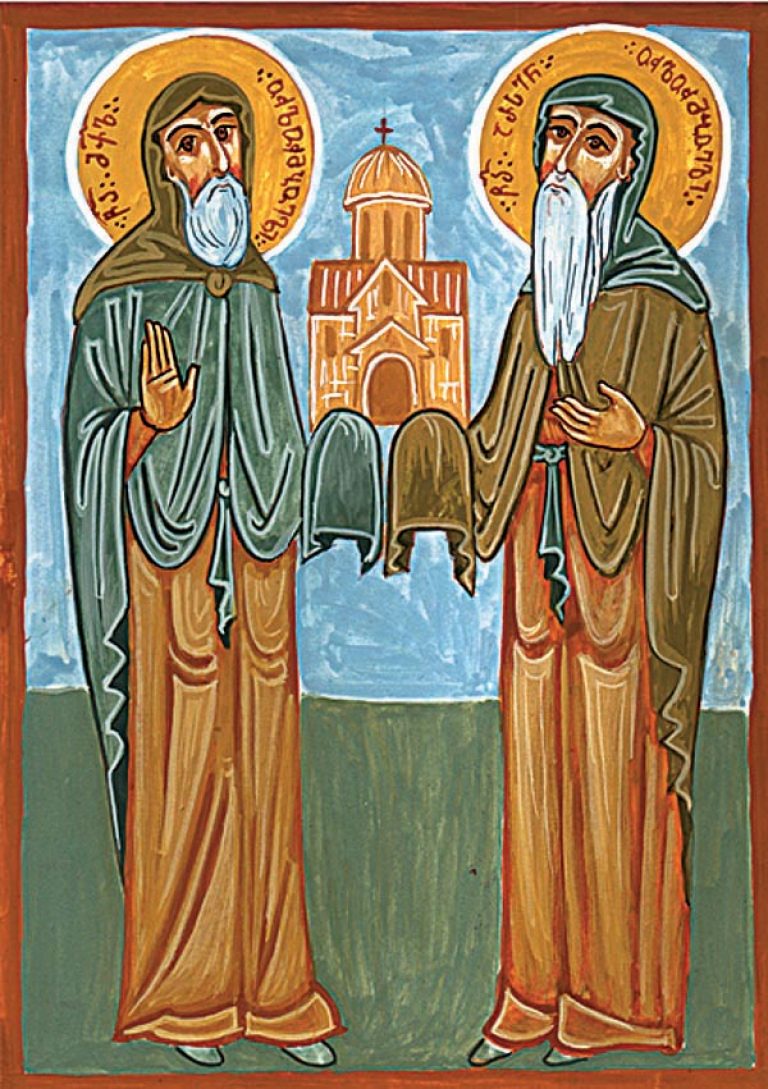
The biographies of Saints Michael and Arsenius the Georgians have unfortunately not been preserved. It is believed that at some point Arsenius moved from Khandzta Monastery to Palestine and labored there with a certain Macarius of Leteti. Afterward, Saint Arsenius founded a Georgian monastery on Mt. Olympus in Asia Minor. Twenty years later, Venerable Ilarion the Georgian arrived on Mt. Olympus and found three Georgian monks who were almost certainly disciples of Michael and Arsenius. It is known that they were contemporaries of Patriarch Sergius of Jerusalem (843-859). The following entry is recorded in the synodicon of Jerusalem’s Holy Cross Monastery: “Our Holy Fathers Michael and Arsenius, founders of Olympus.” The record indicates that Saints Arsenius and Michael established Georgian monasticism on Mt. Olympus.
Saint Ekouménios, Wonderworker of Trikala
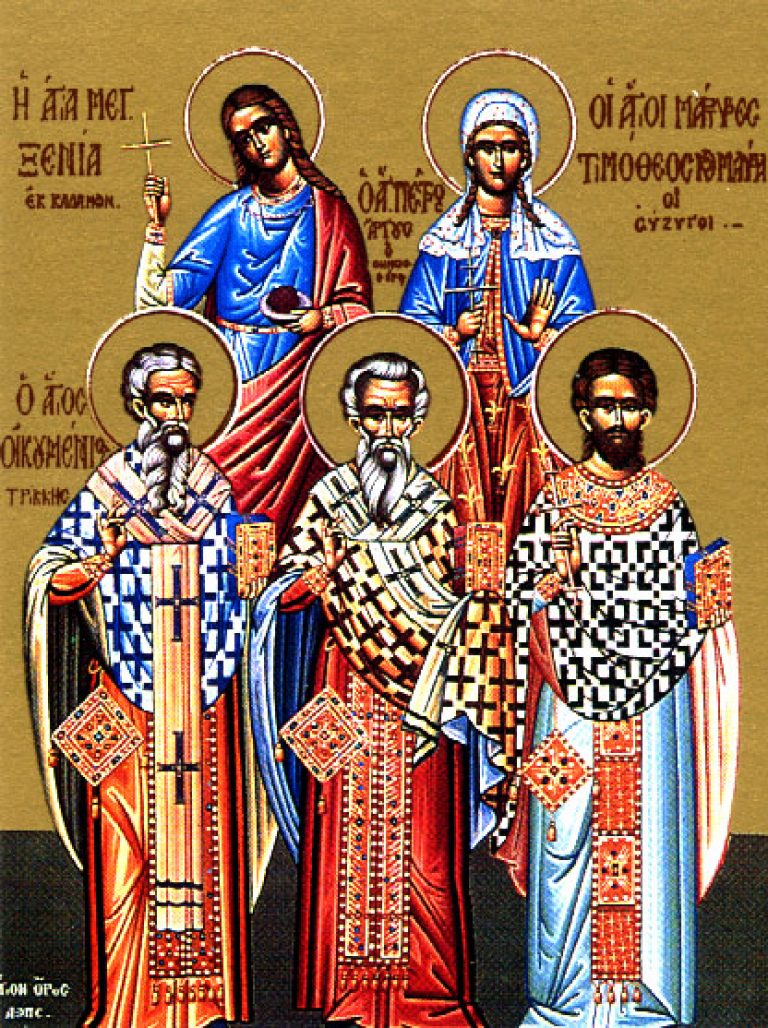
There is much disagreement about Saint Ekouménios (Οικουμένιος), concerning his identity and exactly when he lived. According to prevailing opinion, Saint Ekouménios lived in the late X century (ca. 995). He studied all the Fathers of the Church and became an excellent interpreter of Holy Scripture. At the same time, he wrote Commentaries on the Acts of the Apostles, the fourteen Epistles of Saint Paul, as well as his seven catholic Epistles. His contemporaries esteemed him for his blameless character and his excellent education. Thus, he was chosen for the episcopal throne of Trίkkē (in Thessaly), where he proved himself as a faithful Archpastor and disciple of the Lord Christ. He reposed in peace.
Holy Great Martyr Xenia of Kalamata
Saint Xenia (Xenίa) was born at Kalamata (Kalamáta) in the Peloponnesos (Pelopónnēsos) in the year 291. Her parents were named Nicholas and Despina (Déspina), who were devout Christians from the eastern part of Italy. However, due to the continuous and harsh persecution against Christians during those years, they fled to Kalamata and settled on a farm outside the city, because her father was a farmer. From a young age, instead of playing unseemly games and engaging in idle talk, Xenia stayed at home with her mother, and adorned her soul with fasting, self-control, silence, regular prayer, modesty of speech, tears and vigils. She also helped the poor, as well as widows and orphans with all her strength. She fasted in order to feed the hungry, a practice which befits her name.1 She had curly blonde hair, and her brows framed her large and lively dark blue eyes. Though tall and statuesque,...
Feasts & Saints
GOARCH Digital Chant Stand services: 2026-05-03
Calendar index day: 03-Sunday
Saints Timothy and Maura The Martyrs
Official Saints category of the Greek Orthodox Patriarchate of Antioch and All the East.